Embrace the Color Black for a Modern Kitchen Makeover
If you’re planning a kitchen remodel and want to make a bold, confident statement, few choices land with as much impact as black. It’s dramatic, yes — but it’s also timeless, sleek, and surprisingly versatile. A black kitchen carries an air of sophistication and depth that can transform an ordinary cooking space into a genuinely contemporary one, the kind of room that looks as good in a design magazine as it does on a busy weeknight.
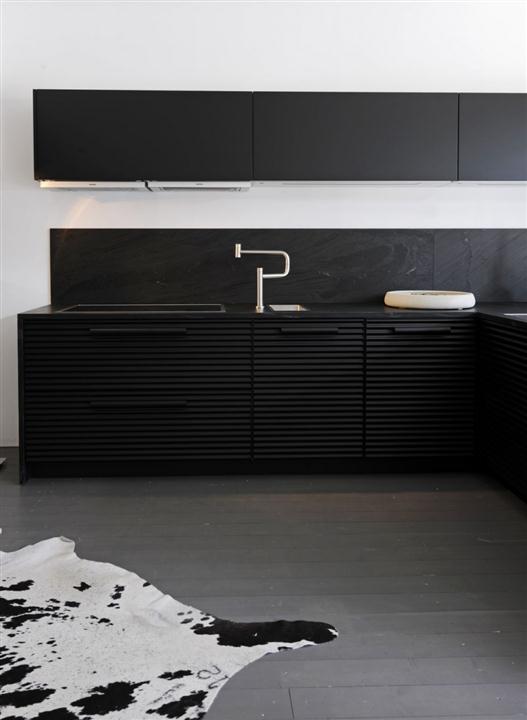
Whether you reach for matte black cabinets, honed black-marble countertops, black stainless-steel appliances, or all three, the effect is at once elegant and powerful. And when black is paired with the warmth of natural wood, it strikes a balance that’s hard to achieve any other way: minimalist and modern, yet cozy and inviting. That’s the sweet spot most homeowners are chasing — refined without feeling cold.
Below, we’ll walk through why black works so well, how to use it without overwhelming a room, and where to look for inspiration — including a century-old Italian kitchen house that has been quietly perfecting the dark, design-forward kitchen for decades.
Why Black Works in Kitchen Design
Black does something no other color quite manages: it adds visual weight and structure. It grounds a room, gives the eye an anchor, and lends instant gravity to an otherwise plain layout. Used thoughtfully, it reads as luxury rather than gloom.
A few reasons designers keep returning to it:
It hides the things you’d rather not see. Fingerprints, water spots, and everyday wear show far less on a black surface than on bright white — particularly on matte cabinetry, which forgives a multitude of small sins.
It frames everything around it. Black is the ultimate backdrop. Brass and copper hardware glow against it. Greenery pops. A bowl of lemons or a single piece of colorful glassware suddenly becomes a focal point. If you like to change the mood of a room with accessories, black gives you a stage.
It pairs with almost anything. Warm oak, pale ash, raw concrete, white marble, aged brass, matte gold — black takes them all and makes them look intentional. Incorporating black wood finishes in cabinetry or open shelving adds texture and a touch of organic charm, softening the modern edge with something tactile and natural.
It ages well. Trends in color come and go, but black is closer to a neutral than a fad. A black kitchen done with quality materials looks deliberate today and will still look deliberate in ten years.
How to Use Black Without Overwhelming the Room
The most common worry about a black kitchen is that it will feel like a cave. It won’t — provided you respect a few simple principles.
Balance dark with light. Pair black lower cabinets with a lighter upper run, a pale backsplash, or light flooring. The contrast keeps the space from feeling heavy and lets the black read as a design choice rather than a default.
Layer your textures. All-matte can feel flat; all-gloss can feel clinical. Mix finishes — matte cabinet fronts, a honed-stone counter, a slightly reflective tile, a length of warm timber. Texture is what gives a monochrome scheme its richness.
Mind the light. Black absorbs light, so a dark kitchen needs more of it. Layer ambient ceiling light with task lighting under cabinets and over the island, and make the most of any natural light you have. In a north-facing or windowless room, lean toward charcoal, deep graphite, or black paired with generous wood rather than a wall-to-wall true black.
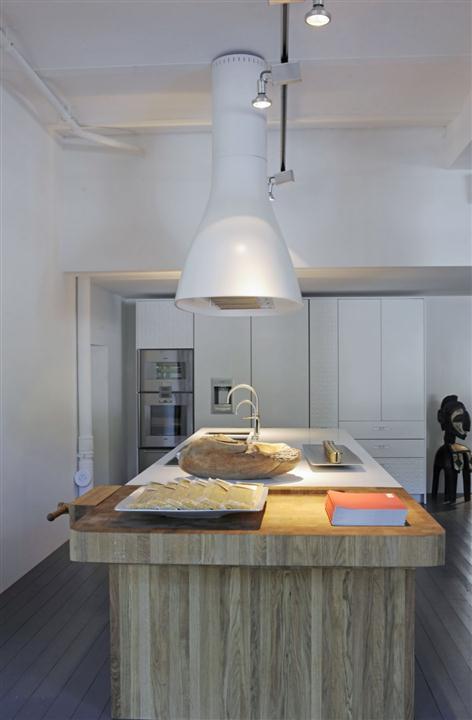
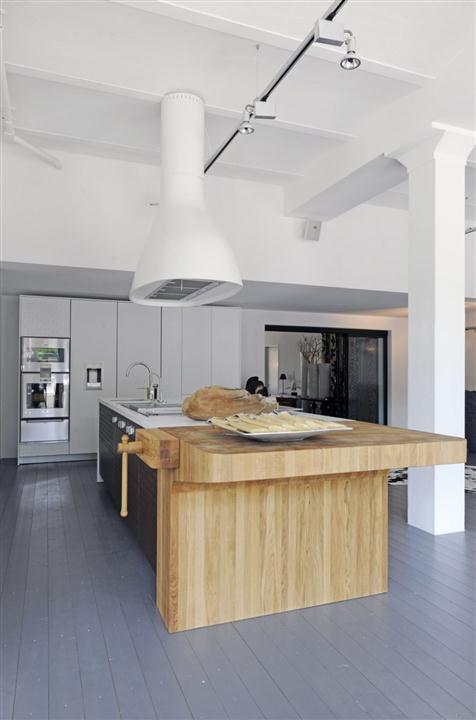
Let metal and wood do the warming. A black-and-stainless scheme can tip cold. Introduce brass, bronze, or warm wood to bring it back. Even a single wooden open shelf or a butcher-block section of counter changes the entire temperature of the room.
Use it where it earns its place. You don’t have to commit to a fully black kitchen to get the look. A black island anchoring white perimeter cabinets, a black range hood as a sculptural centerpiece, or black-framed glass cabinetry can deliver the drama with a fraction of the commitment.
Materials Worth Considering
- Matte black cabinetry — the workhorse of the modern dark kitchen; soft, contemporary, and forgiving of fingerprints.
- Black natural stone — marble, granite, soapstone, or quartzite in deep tones; honed (matte) finishes feel more modern than polished, and the natural veining keeps large dark expanses from looking flat.
- Black stainless-steel appliances — a warmer, more cohesive alternative to standard stainless that blends into a dark scheme instead of interrupting it.
- Blackened or dark-stained wood — for cabinets, shelving, or an island, adding grain and warmth.
- Matte black hardware and fixtures — taps, handles, and pulls that tie the whole palette together, or brass and bronze accents for contrast.

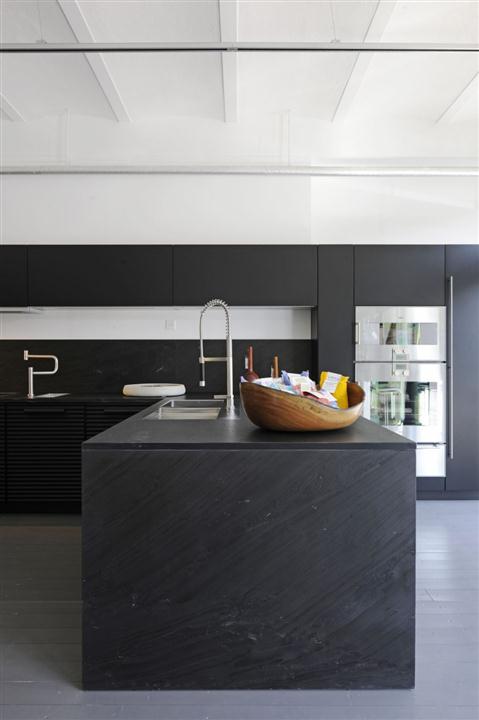
Inspiration From a Modern Master: Schiffini
If you want to see how far the dark, design-led kitchen can go, look to Schiffini, the Italian kitchen house whose black and marble-accented models are a masterclass in the style. Their interiors show how black can be minimalist and inviting at the same time — clean lines, integrated appliances, and carefully placed wooden and stone elements that make a space feel as suited to a quiet morning coffee as to entertaining a crowd.
A storied Italian brand rooted in Ligurian craftsmanship
Schiffini’s story begins in 1925 in La Spezia, Liguria, where founder Enrico Schiffini opened a workshop building wooden fittings for the ships of the local naval arsenal and the great vessels of the day. That nautical DNA — precision, compact intelligence, respect for materials — never really left the brand. From the 1950s onward, the company turned its attention to kitchen furniture and went on to help pioneer the very idea of the modular kitchen in Italy.
A pivotal force in Italian design
From the 1960s, Schiffini played an outsized role in defining what “Italian design” meant in the kitchen. The catalyst was a long and now-legendary partnership with the architect Vico Magistretti, one of the true masters of postwar Italian design. The collaboration began in the 1960s and continued until Magistretti’s death in 2006, producing a run of kitchens — Timo, Campiglia, Arnia, Solaro, and others — that elevated kitchen furniture into the realm of serious design.
Over the years Schiffini has also worked with a roster of celebrated names including Alfredo Häberli, Jasper Morrison, Alfonso Arosio, Giuliano Giaroli, Tito Agnoli, and Ludovica and Roberto Palomba, each adding to the brand’s evolving aesthetic without diluting its essential restraint.
Signature collections
Cinqueterre (1999) is the design that revolutionised the segment: the first kitchen produced entirely in aluminium, instantly recognisable by its doors made of overlapping ribbed staves and tubular handles that catch the light in a quiet, rhythmic way. For the brand’s centenary, Schiffini reissued it as Omaggio alla Cinqueterre — keeping Magistretti’s original aluminium extrusions almost untouched, but introducing a new material dimension in Portoro, a precious black stone quarried near the Gulf of La Spezia. The dark stone against anodised aluminium is exactly the kind of luxurious contrast that makes a black kitchen sing.
Cina (1986) is the other icon — a model of elegant geometry defined by its bold steel hood and recessed handles formed by a groove in the upper edge of the doors, which give the fronts a single, continuous, almost musical silhouette. Magistretti’s instinct here was subtraction: strip away everything inessential until only timeless form remains. The updated Cina, offered with worksurfaces in quartzite, marble resin, or the dramatic Sahara Noir marble, went on to win an ELLE Decoration International Design Award (EDIDA) in 2026 — proof that a design from 1986 can still feel utterly contemporary.
Brand evolution and design leadership
In 2023, Schiffini became part of SCIC Italia, a major Italian luxury kitchen and furniture group, in a move aimed at extending the brand’s global reach while protecting its legacy of craftsmanship. Under SCIC’s ownership — led by CEO Lorenzo Marconi Fornari — the brand has taken on a younger, more contemporary identity.
As Schiffini entered its second century (its centenary fell in 2025), creative direction passed to the architect Marco Costanzi, who took up the art-director role in 2025. Costanzi’s approach blends spatial balance, light, and minimalist elegance with the brand’s tradition of marrying function, beauty, and sustainability. His first moves were to refresh the Magistretti classics — Cinqueterre and Cina — and at Milan Design Week 2026 he introduced BAIA, a new model emphasising technological innovation and material research, alongside the brand’s first foray into wardrobes and the sleeping area.
Schiffini at a glance
| Feature | Details |
|---|---|
| Founded | 1925, La Spezia, Liguria |
| Origins | Naval carpentry, later modular kitchens |
| Key designers | Vico Magistretti, Alfredo Häberli, Jasper Morrison, and others |
| Iconic models | Cina (1986), Cinqueterre (1999) |
| Acquisition | 2023, by SCIC Italia |
| Current art director | Marco Costanzi (since 2025) |
| Philosophy | Italian craftsmanship, design, innovation, and sustainability |
Schiffini’s designers root every piece in craftsmanship and modular intelligence — and if you’re drawn to the dark side of kitchen design, their black-finished and marble-accented collections are about as good a source of inspiration as exists.
The Takeaway
Choosing black for a modern kitchen is a bold move, but it’s a sophisticated one. It brings elegance, depth, and a quiet sense of luxury to a space, whether you go fully minimalist or temper the drama with warm wood and natural stone for texture and comfort. Get the balance of light, material, and contrast right, and a black kitchen never feels heavy — it feels considered.
With visionary brands like Schiffini showing what’s possible, black has long since stopped being a passing trend. It’s a timeless choice that pairs style with real, everyday function. So if you’re planning a remodel, don’t overlook it. Black might just be the statement your kitchen has been waiting for.